A coach's eye, measured in degrees
Film a few seconds of skating — or a goalie's stance — on any phone. BenchIQ runs frame-by-frame motion analysis and returns a 0–100 score, hard measurements against age-appropriate targets, and something to do about every flag. Two ways to get it: coaches get the full analysis toolkit with a Pro account, and families get it per athlete with Athlete+ — AI analysis is included with both.
Skating, measured stride by stride
Four stride views — front and side, forward and backward — each analysed and scored on its own. Every number comes from frame-by-frame motion analysis of the clip itself; the skeleton drawn on the replay is a visual guide, not the source.
- Overall skating score 0–100 per clip, with strengths and top focuses called out in plain language
- Forward lean — the posture that decides how much of each push actually goes forward
- Knee bend, left and right measured separately — a straighter knee shortens every stride on that side
- Shin alignment — whether the heel stays planted through the push
- Stride rate, center return and arm swing — tempo, recovery under the body, and what the upper half is doing
- Every measurement shown against an age-appropriate target range, flagged GOOD, HIGH or LOW
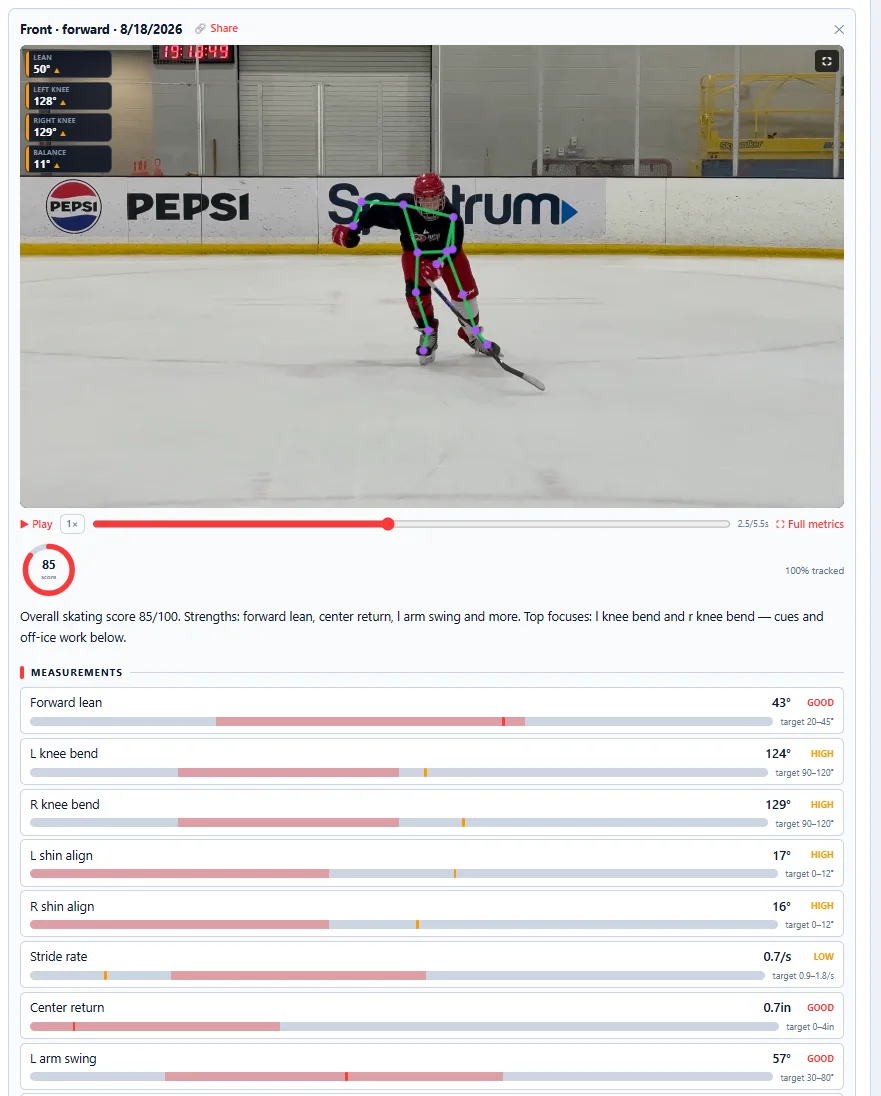
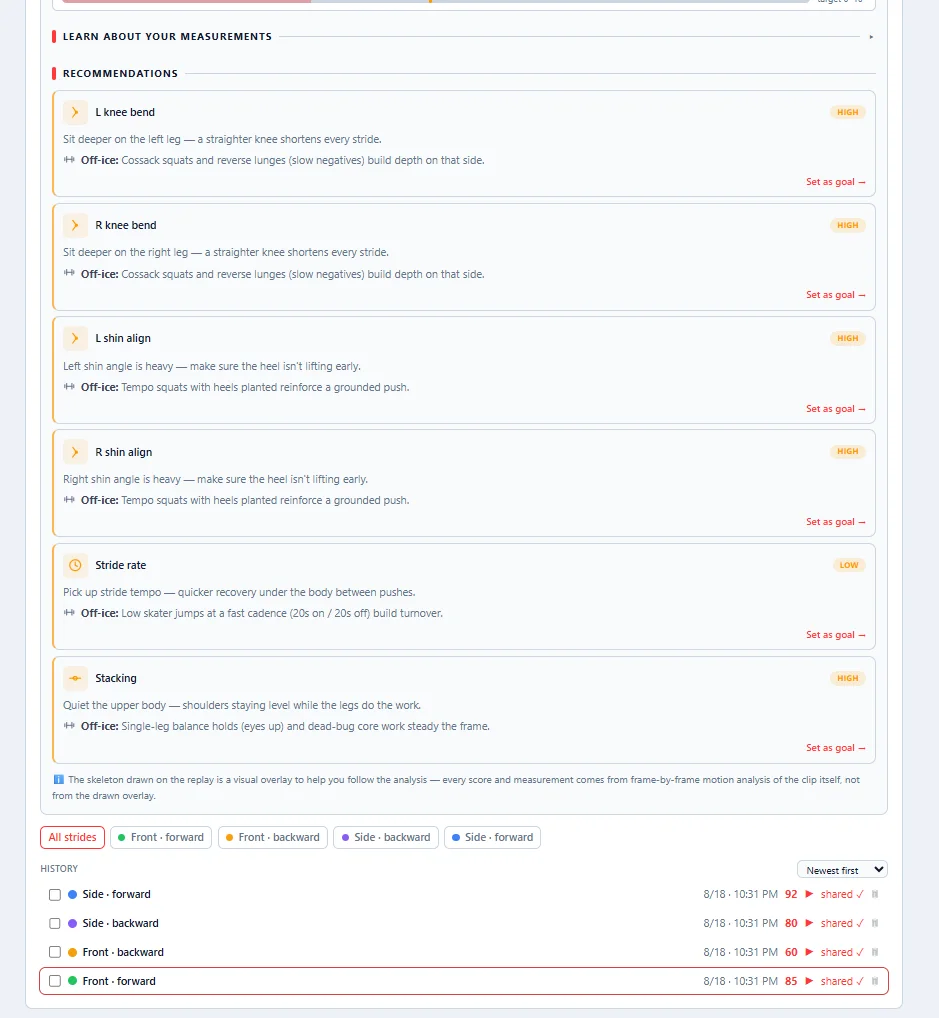
Every flag comes back with something to do about it
A measurement is only useful if it tells you what to change. Each flagged metric returns a cue the athlete can hear in their head, plus a specific off-ice exercise.
- Plain-language cues — “sit deeper on the left leg” beats “knee angle 124°”
- Off-ice work attached to every flag: Cossack squats for depth, tempo squats for a grounded push, skater jumps for turnover
- One tap turns any recommendation into a tracked goal on the athlete's Goals page
- History by stride type — front-forward vs side-backward, filtered and trended over months
- Shared with the coach: the staff sees the same analysis the athlete does
Goalie stance analysis
The same frame-by-frame engine, tuned for the crease. Film a goalie working through their rotation and get a stance report a goalie coach would recognize.
- Stance score with facings held through the full rotation — front, both sides and back
- Net coverage — how much of the net the stance actually takes away, weighted to where shots really go
- Five-hole seal, stance footprint and depth-of-knee-bend read from the silhouette, not guesswork
- Head steadiness and glove positioning tracked through the movement
- Coach gear pinning: tap the blocker, catcher and skates on key frames to dial in the tracking before sending the analysis to the athlete
- The same flag-to-fix recommendations, tuned for goalies
For families, athletes and coaches
Filmed on a phone, from the stands. Athlete+ includes ten analyses a month across the four stride views; coach-shared replays are free for every family to watch.
- Athletes and families run analyses right from the athlete hub — ten a month with Athlete+
- Coaches run and share analyses from the film room, and can analyze a whole session's clips in one sitting
- Scores chart over months on the athlete's IQ Coach tab — a stride becomes a trend line instead of a snapshot
- Share a tracked replay to the team hub or with a link — anyone can watch, the full report stays with the athlete
- Everything stays inside BenchIQ — clips, scores and history live on the athlete's own record
See the stride the way the engine sees it
AI analysis is included two ways: with a coach Pro account (the full toolkit, uncapped, share to any athlete) and with Athlete+ ($9.99/yr per athlete — ten analyses a month plus IQ Coach, the film vault and highlight reels).